MLB Attendance and Viewership 2025: Why Audience Growth Matters to Bettors
 Available in US

The Numbers That Should Matter to Every UK Punter
The 2025 MLB regular season closed with a set of audience numbers that surprised even some of the league’s commercial team. Total attendance reached 71.4 million fans across the regular season – the third consecutive year of attendance growth, a streak that had not happened since 2007. ESPN’s Sunday Night Baseball averaged 1.8 million viewers per game, the strongest season for the broadcast in 12 years and a 21% year-on-year increase. The MLB social-media properties generated 17.8 billion views across the regular season, a 20% increase year on year, making it the most-viewed regular season in league history.
For UK punters wondering whether these statistics matter for their MLB betting work, the answer is direct. Bigger audiences mean bigger betting handle. Bigger betting handle means deeper markets, tighter margins, faster price discovery, and more book competition for the recreational money. The audience growth that MLB has assembled over the past three years has structural implications for how UK MLB markets will price and develop over the coming seasons, and a punter who understands the trajectory is better positioned to identify where the structural edges are emerging and disappearing.
The Attendance Headline Numbers in Context
The 71.4 million attendance figure for 2025 deserves unpacking properly. The number represents total fans across all 2,430 regular-season games in 30 ballparks, averaged at roughly 29,400 fans per game across the league. The third consecutive year of growth represents a meaningful trend reversal from the decade-long attendance decline that ran from 2007 through 2019, followed by the pandemic-shortened 2020 season and the gradual recovery period that followed.
The drivers of the attendance growth are not single-source. The pitch-clock rule changes that compressed average game time to 2:38 in 2025 made attendance more attractive to casual fans whose previous reluctance was the four-hour game length. The improved broadcast quality and digital-distribution access to MLB content has expanded the casual fan base, which in turn produces incremental ballpark attendance from the converted-casual segment. The marketing emphasis on young talent – rookie call-ups, prospects making major-league debuts mid-season – has generated narrative interest that drives both broadcast viewership and gate sales.
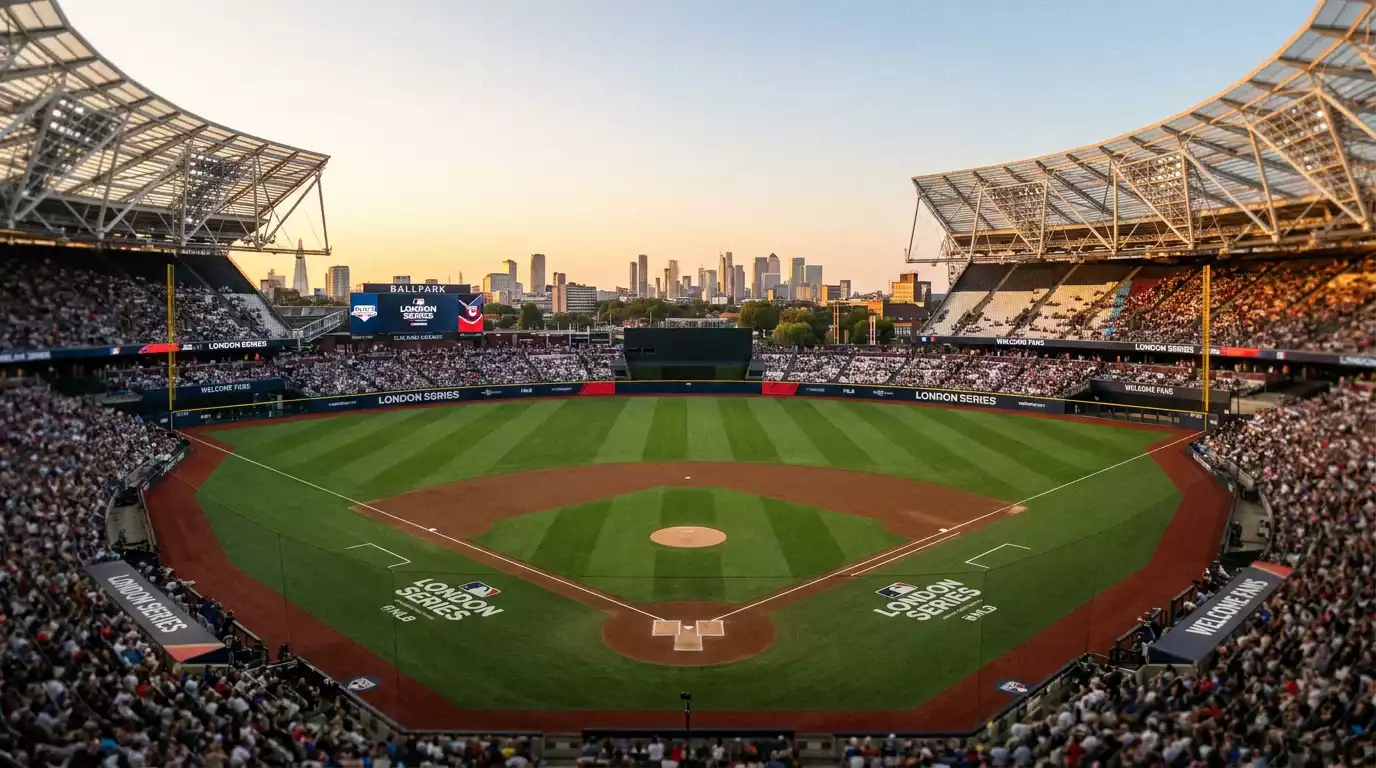
The international growth story matters separately. The 2024 London Series at London Stadium pulled 108,956 fans across two days, with 71% of attendees being British rather than American tourists and an estimated $67 million economic impact for London. MLB merchandise sales in the UK grew 43% year on year following that weekend, and the league’s UK social channels added subscribers at 133% growth. The international audience growth is not just window-dressing – it is a meaningful component of the broader audience expansion that the headline US attendance numbers do not fully capture.
Broadcast Viewership in 2025
The broadcast picture in 2025 was the strongest in more than a decade. The 1.8 million Sunday Night Baseball average for ESPN was the highest figure since 2013, representing a 21% year-on-year increase. The growth was not concentrated in any single demographic – gains came across age brackets, with particularly notable growth in the 18-34 segment that had been the demographic most resistant to baseball viewership across the late 2010s decline.
The Fox Saturday Baseball-of-the-Week numbers showed parallel growth, with national broadcast averages exceeding the 2024 figures by similar percentages. The TBS postseason coverage in October 2025 produced viewership that exceeded prior-year comparisons across the Wild Card and Division Series rounds, and the World Series itself drew the strongest US viewership since 2017. The cumulative picture is of a sport whose national broadcast metrics have genuinely reversed a long decline.
The implications for betting are not always intuitive. Higher viewership means more recreational punters watching games and placing wagers, which in turn means deeper book volume on the marquee broadcast windows. Sunday Night Baseball games, Saturday afternoon Fox games, and postseason coverage produce the deepest UK betting markets of the regular season. The tight pricing on those marquee games reflects the volume – recreational money flowing in from many directions tends to balance the book and keep margins competitive.
The strategic implication is that the structural edges sit in the games that get the lowest broadcast attention, not the highest. A Tuesday night Pirates-Reds matchup with no national broadcast presence and minimal recreational viewing produces softer pricing than a Sunday night Yankees-Dodgers game with millions of casual viewers placing bets. Counterintuitively, UK punters serious about MLB betting should focus more analytical work on the under-televised midweek games than on the marquee broadcast slots, because the price discovery on the smaller markets is thinner and the edges are easier to identify.
Digital and Social Growth in 2025
The 17.8 billion social-media view figure for 2025 represents the most-viewed MLB regular season in the league’s recorded history, with a 20% year-on-year increase across the combined MLB and MLB Español social accounts. The growth is concentrated in short-form video content distributed across the major social platforms, with highlight clips, home-run compilations, and behind-the-scenes content driving the majority of the view volume.
The strategic relevance of social viewership growth for betting markets sits in audience-pipeline mechanics. The fan who consumes MLB highlights on social media is the prospect for tomorrow’s broadcast viewer, who in turn becomes the year-after-next recreational punter. The 20% social growth in 2025 represents the leading indicator of recreational-money-flow growth in 2026 and 2027. UK punters watching the social-audience trajectory are watching the future scale of the betting markets they will be operating in.
The UK-specific portion of the social growth has been particularly strong. MLB’s UK social channels grew at the 133% year-on-year rate noted earlier, far outpacing the global average. The British audience for MLB content is genuinely expanding rather than holding flat, and the league’s stated commitment to the UK as a strategic market – chief operations and strategy officer Chris Marinak told Associated Press in 2024 that the league has clearly identified the UK as a priority market and an area for international growth emphasis – reinforces the trajectory that the data already shows.
Why This Matters for UK Betting Markets
The connection between audience growth and UK betting markets runs through several mechanical channels. The first is book entry. As MLB audiences grow in the UK, more UK-licensed bookmakers will add or expand MLB coverage in their daily offerings. The 2026 season is likely to see at least one or two new UK operators commit to comprehensive MLB pricing where their current coverage is selective or absent. New market entrants compress margins as they compete for the growing recreational money pool.
The second channel is market depth at existing books. The UK operators currently offering comprehensive MLB markets – moneyline, run line, totals, F5, pitcher props – are likely to expand their prop-market depth as recreational volume justifies the operational cost. Hitter props that are currently available only on marquee broadcast games will become available across the full daily slate. Bullpen-specific props, currently rare, may become standard offerings. The expanding market depth creates more line-shopping opportunities and more potential mispricings for prepared punters to exploit.
The third channel is regulatory attention. The UK Gambling Commission has signalled increasing focus on the rapidly growing online betting verticals, and the new statutory levy of 1.1% on bookmaker gross gambling yield from October 2025 sits as a structural factor that affects every UK-licensed operator’s margin structure. As MLB audiences grow in the UK, the regulatory attention on MLB markets will grow proportionally. Punters should expect tighter operator compliance requirements, more aggressive responsible-gambling enforcement, and potentially new market restrictions over the coming seasons.
The cumulative implication is that the UK MLB betting landscape is in a phase of genuine structural expansion rather than the steady-state market it represented in 2018-2022. Punters who position now – establishing accounts at multiple operators, building analytical frameworks tuned to the modern game, internalising the rule-change implications around the pitch clock and the offensive environment – are positioned to benefit as the market depth catches up to the audience growth.
UK-Specific Audience Trajectory
The UK-specific audience trajectory for MLB carries its own internal momentum that does not fully depend on the broader American audience growth. The London Series effect – four visits between 2019 and 2024, even with the 2026 cancellation due to West Ham Stadium and FIFA World Cup broadcasting conflicts – has created a UK fan base whose engagement with MLB content runs higher than the typical European baseball audience would suggest. The BBC’s continued involvement in London Series coverage, the TNT Sports MLB programming, and the rising MLB.TV subscription base in the UK all reinforce the trajectory.
The practical implication for UK punters is that the markets they will be operating in across the 2026-2030 window will be materially deeper than the 2020-2024 baseline. The price discovery will be sharper. The competition between operators will be more intense. The recreational-money flow will increase, both compressing margins and creating the public-money bias patterns that produce systematic edges for prepared punters. The audience growth is, in a real sense, the structural backdrop against which every other analytical edge plays out – and the natural starting point for any UK punter building a proper analytical framework for the modern game is understanding the price-conversion mechanics that underpin every wager. The fundamentals of how MLB decimal and American odds conversion works sit as the foundational layer of the analytical work, completing the cycle of cluster topics that build the full picture.
The Audience Trajectory as the Backdrop
The right framing for UK punters approaching the 2026 season is to treat the audience growth not as a marketing story but as the structural backdrop that will shape the betting landscape across the coming years. Bigger audiences mean deeper markets, more book competition, tighter margins, and more systematic opportunities for prepared punters. The bettors who understand the trajectory and position their analytical work accordingly will operate within a market that rewards their preparation more reliably than the smaller, less liquid markets of the past decade did. MLB is growing in the UK. The betting infrastructure is growing with it. The punters who do the work now are positioning for the markets that the audience growth is building.
Does higher attendance correlate with higher run totals?
There is a weak positive correlation between attendance and scoring at the team level – better teams draw more fans and also produce more offensive output – but the relationship does not translate into actionable betting strategy. The game-by-game variance in scoring is much larger than the cross-team attendance variance, and attempting to use attendance as a predictor for totals would produce noise rather than signal. The audience-growth story matters for market depth and pricing structure rather than as a direct input into per-game totals projections.
How is MLB’s UK fan base measured?
MLB tracks UK fan engagement through several parallel metrics: MLB.TV UK subscribers, MLB UK social-media account followers and engagement rates, merchandise sales tracked through licensed UK retailers, London Series attendance and ticket-buyer geography, and broadcast viewership through partners like BBC and TNT Sports. The combined picture is a UK fan base that has grown materially since the first London Series in 2019, with the 2024 London Series weekend producing 43% year-on-year UK merchandise sales growth and 133% growth in MLB UK social subscribers.
Prepared by the Betting Tips for Baseball editorial staff.