
UK Statutory Gambling Levy 2025: What the 1.1% GGY Charge Means for Your MLB Bets
 Available in US
The Charge That Nobody Talks About but Everyone Pays
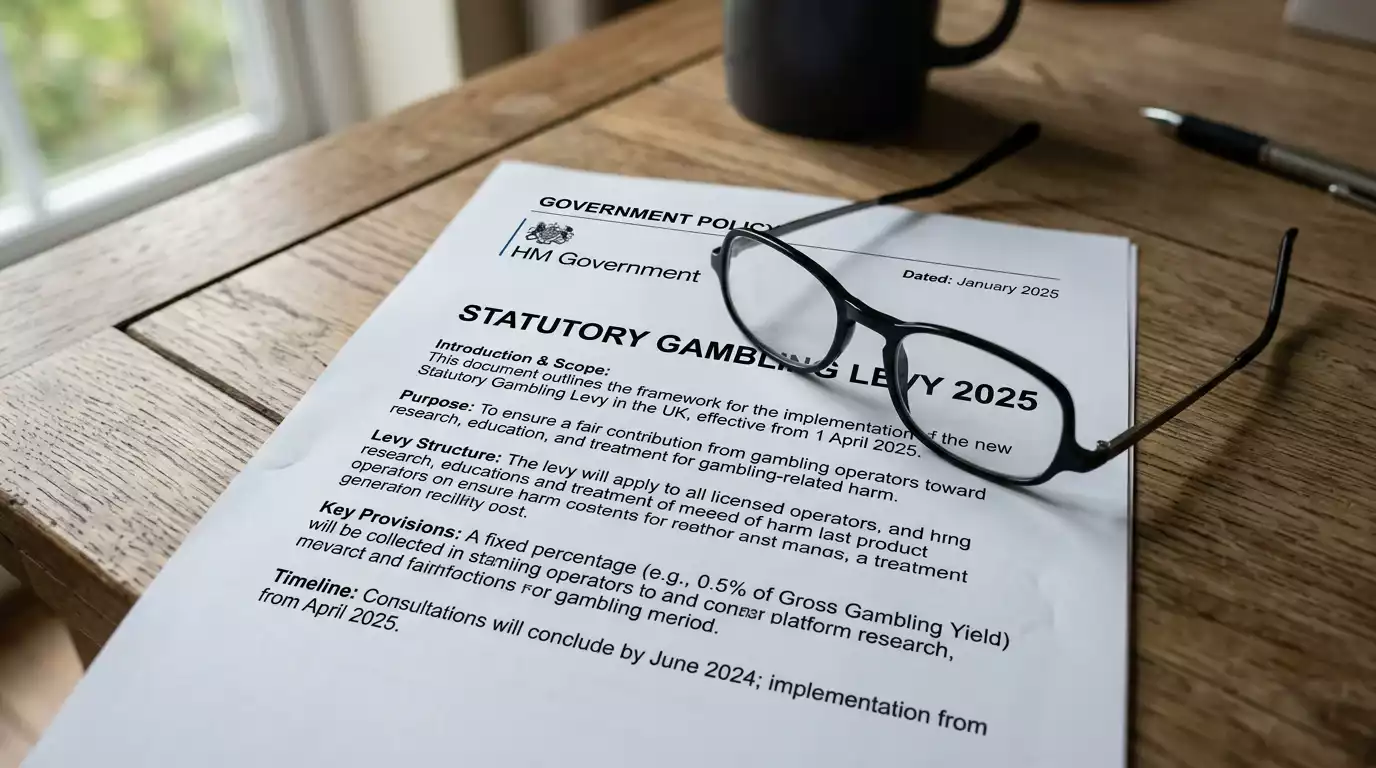
On the first of October last year, every UK-licensed online sportsbook began paying a 1.1% statutory levy on its Gross Gambling Yield to the UK government. It was a quieter regulatory shift than most punters realised, with no front-page coverage and no operator-side fuss, but it permanently changed the cost structure of every bet placed at a UKGC-licensed book. If you bet MLB through a UK operator, you are paying it. You just are not seeing it on your bet slip.
The Department for Digital, Culture, Media and Sport projected the levy would raise £90 to £100 million per year, funding research, prevention, and treatment of gambling-related harm. The framework replaces a voluntary donation system that had been running for years and had been criticised for inconsistency and underfunding. What matters for a UK punter is not the policy debate. What matters is whether the cost shows up in your odds – and the answer is yes, partially, in ways that compound across a long MLB season.
What the Levy Actually Is
The 1.1% statutory levy applies to Gross Gambling Yield, which is the amount operators retain after paying out winnings – essentially their gross revenue from gambling activity. The charge is collected at the operator level. Each UKGC-licensed online sportsbook calculates its GGY across the relevant accounting period, multiplies by 1.1%, and remits that figure to the government on the prescribed schedule.
For context on scale, the GGY of the remote casino, betting, and bingo sector in the UK reached £7.8 billion in the financial year to March 2025, a 13.1% increase on the prior year, with the online vertical alone adding more than £900 million in growth. At 1.1% of that base, the levy translates into substantial annual sums – well aligned with the projected £90 to £100 million collection target.
The mechanism is administratively simple by design. Operators were already filing detailed financial returns to the UKGC and to HMRC for tax purposes; the levy uses the same reporting infrastructure. Punters do not pay the levy directly. The cost flows through the operator’s margin structure, which means the visible effect on a UK MLB bettor’s day-to-day experience is not a line item – it is a shift in the underlying competitiveness of the prices offered.
Why the Levy Was Introduced
The policy logic was articulated clearly by Baroness Fiona Twycross, the Minister for Gambling at DCMS. The current funding system for research, prevention, and treatment of gambling-related harms, she said in a written statement, reliant on voluntary donations from industry, was no longer fit for purpose. That, she explained, was why the government had taken the decision to introduce a statutory levy as a priority, in line with the manifesto commitment to reduce gambling harms.
The voluntary system that the levy replaced had several structural weaknesses. Donations were uneven across operators, with the largest businesses contributing the most and smaller operators sometimes contributing nothing. The total annual funding produced was unpredictable, complicating budget planning for the charities and research bodies that depended on it. And the perception of operator influence over the recipient organisations created accountability questions that the voluntary structure was poorly equipped to resolve.
The statutory framework addresses each of these. The 1.1% rate applies equally to all UKGC-licensed operators above a low de minimis threshold. The collection mechanism is automatic and predictable, allowing recipient bodies to plan multi-year budgets. The funding flows through government channels rather than operator-directed donations, severing the perception of influence. The UK Government framed the change directly. The statutory levy, the formal government statement read, represents a generational change to funding arrangements and a significant transformation in the government’s commitment to strengthening efforts to understand, tackle, and treat gambling-related harm.
Impact on Bookmaker Margins
This is where the levy becomes relevant for the practical UK MLB bettor. Operators that face a 1.1% additional cost on their GGY have three options. They can absorb the cost out of their existing margins, accepting reduced profitability. They can offset it by raising their headline overround on offered prices, passing the cost through to punters. Or they can split the difference, absorbing part of the cost and raising margins enough to recover the rest.
In practice the response across the UK market has been a partial pass-through. The largest operators with the deepest margins and the most competitive pricing pressure have absorbed most of the levy. Mid-sized operators have raised margins on lower-profile markets, where pricing pressure is less intense, while keeping flagship-market pricing close to pre-levy levels. Smaller operators have generally passed more of the cost through, on the logic that their pricing-sensitive customer base will continue to use them on convenience grounds despite slightly worse pricing.
For an MLB bettor, the practical effect of all this is small but real. A line that might have been -110 in the pre-levy era could now show as -112 at the same operator, depending on the market and the timing. Across a season of bets, the cumulative impact of two cents on an MLB moneyline compounds. A bettor placing 200 moneyline wagers per season at slightly worse pricing loses meaningful ground over time, even if the per-bet cost is invisible.
Line shopping becomes more valuable post-levy than pre-levy. With operators making different choices about how much of the levy cost to pass through, the same MLB market can show meaningfully different prices across UK books in ways that were not as common before the levy took effect. The punter who maintains accounts at three or four UKGC-licensed operators and reflexively compares prices before every wager captures pricing that flat-loyalty punters miss.
How the Funds Are Used
The £90 to £100 million collected annually is allocated across three pillars: research, prevention, and treatment of gambling-related harm. The exact split is determined by the relevant government bodies in consultation with the recipient organisations, but the rough proportions have been set out publicly.
Research funding supports academic and applied research into the patterns, drivers, and consequences of gambling harm in the UK population. This includes the Gambling Survey for Great Britain, which produces the most authoritative dataset on participation and harm prevalence in the country, and which now publishes data with sufficient cadence to track shifts in the population over time rather than relying on intermittent snapshots.
Prevention funding supports public-education campaigns, in-school and community-based awareness initiatives, and behavioural interventions designed to reduce the incidence of harmful gambling before it requires clinical treatment. The prevention category has historically been the most underfunded under the voluntary system, and the levy structure was explicitly designed to increase resource allocation here.
Treatment funding supports the clinical infrastructure that treats individuals with gambling disorder, including NHS-affiliated specialist clinics, charity-run helplines and support services, and the network of practitioners trained to provide gambling-specific clinical interventions. The expansion of treatment access has been a stated priority of the levy framework, with the explicit goal of building treatment capacity that meets demonstrated demand.
For UK MLB bettors, this funding structure has indirect implications. A better-funded prevention infrastructure should, in theory, reduce the long-term population-level incidence of harmful gambling, which in turn supports the long-term commercial sustainability of the regulated market. The economics of the levy are not purely punitive – they are intended to underwrite the social infrastructure that allows a regulated betting market to function.
What This Means When You Place Your Next MLB Bet
Three practical adjustments make sense in the post-levy environment. The first is line shopping, which I have already mentioned and which now matters more than at any point in my memory. The variation in how operators have passed the levy through has produced sharper price divergence across books than the market exhibited before October 2025.
The second is awareness of the cost structure. The levy is not a tax on punters in the legal sense, but it is a real cost to the betting ecosystem that ultimately reaches punters through the margins on offered prices. Recognising this helps frame realistic expectations about the long-term ROI achievable on UK-priced MLB markets. A 2% bettor edge over closing lines, which was already a high bar, is fractionally harder to achieve when operators’ baseline margins have ticked up by a few basis points.
The third adjustment is to take advantage of the responsible-gambling infrastructure that the levy funds. The same money that supports research and treatment also supports the deposit limits, time-outs, and self-exclusion tools that every UKGC-licensed operator must offer. These tools are not just regulatory requirements; they are practical controls that allow disciplined bettors to maintain bankroll integrity across a long MLB season. For the broader picture of how the responsible-gambling framework intersects with the population-level data, see my treatment of what the latest UK gambling survey and PGSI data say about sports bettors. The survey work that the levy now funds is part of the same ecosystem that produces the data underlying every responsible-gambling intervention available to UK punters.
The Quiet Adjustment That Will Compound Across Your Season
The levy itself is a small line in the operator’s accounts. The cumulative effect on UK punters is also small, in any individual bet. The point is that small effects compound across a 162-game MLB season, especially for serious punters operating on thin edges. The disciplined response is not to lament the levy – the social policy case for it is reasonable, the funding outcomes are likely to be net-positive for the betting ecosystem over time – but to adjust your routine to capture the marginal value that line shopping now offers more visibly than before. The levy has not made MLB betting unprofitable. It has simply tightened the margins, which means the punters who were already disciplined about pricing are better positioned in the new environment than the ones who treated their preferred operator as the only operator. The skill that matters most has not changed. It just matters slightly more.
Will the levy be increased above 1.1% in coming years?
The 1.1% rate is fixed under the current statutory instrument, but the framework includes provision for periodic review. Government messaging has not signalled an immediate intent to raise the rate, and the projected revenue of £90 to £100 million annually is broadly aligned with the funding needs identified in the underlying policy work. Future increases would require a separate statutory process and political decision. Treat the current rate as the operating reality for the foreseeable future, with the understanding that the rate could change on a multi-year horizon.
Does the levy apply to overseas-licensed operators serving UK customers?
The levy applies to operators holding a UK Gambling Commission licence, which is the legal framework permitting them to serve UK customers. Operators outside the UKGC licensing perimeter are not subject to the levy, but they are also not legally permitted to market to or accept wagers from UK residents. UK punters using offshore sites are outside the regulated framework entirely, and the comparison between UKGC operators and offshore alternatives is not really a levy question – it is a question of which regulatory perimeter you want to bet inside.
Published by the Betting Tips for Baseball team.