MLB Integrity Monitoring: How the League and Sportsbooks Police Betting Patterns
 Available in US
Why You Should Care About What Happens Behind the Bookmaker’s Screen
A few years ago I had coffee with a former bookmaker who had spent a decade in the back office of one of the larger British operators. He told me that the part of the business UK punters would find most surprising was not the pricing algorithms or the risk models – it was the integrity layer. Every meaningful sporting event has a small team of people somewhere watching the wagering patterns in real time, comparing them against historical baselines, looking for the shapes that should not be there. For MLB specifically, that monitoring is now extensive enough that it would be visible to the public only when something goes wrong – which is precisely the point.
For UK bettors, the question of how integrity monitoring works is not academic. Americans wagered $166.94 billion legally on sport in 2025, an eleven percent jump over the prior year, and a substantial share of that volume flowed through MLB markets that UK-facing books also carry. The line your UK operator displays is downstream of US action, which means the integrity infrastructure protecting the US market is, in a meaningful sense, also protecting yours. Understanding how that infrastructure works helps you read the prices you see.
How MLB Monitors Bets in Real Time
The operational backbone of MLB integrity monitoring is a data-sharing arrangement between the league and its regulated sportsbook partners. Rob Manfred has described the framework directly. Once the league is in an environment where sports betting is happening, he said, the crucial issue becomes access to data, and access to data requires a relationship with the sportsbooks. That relationship is the architecture that makes pattern detection possible.
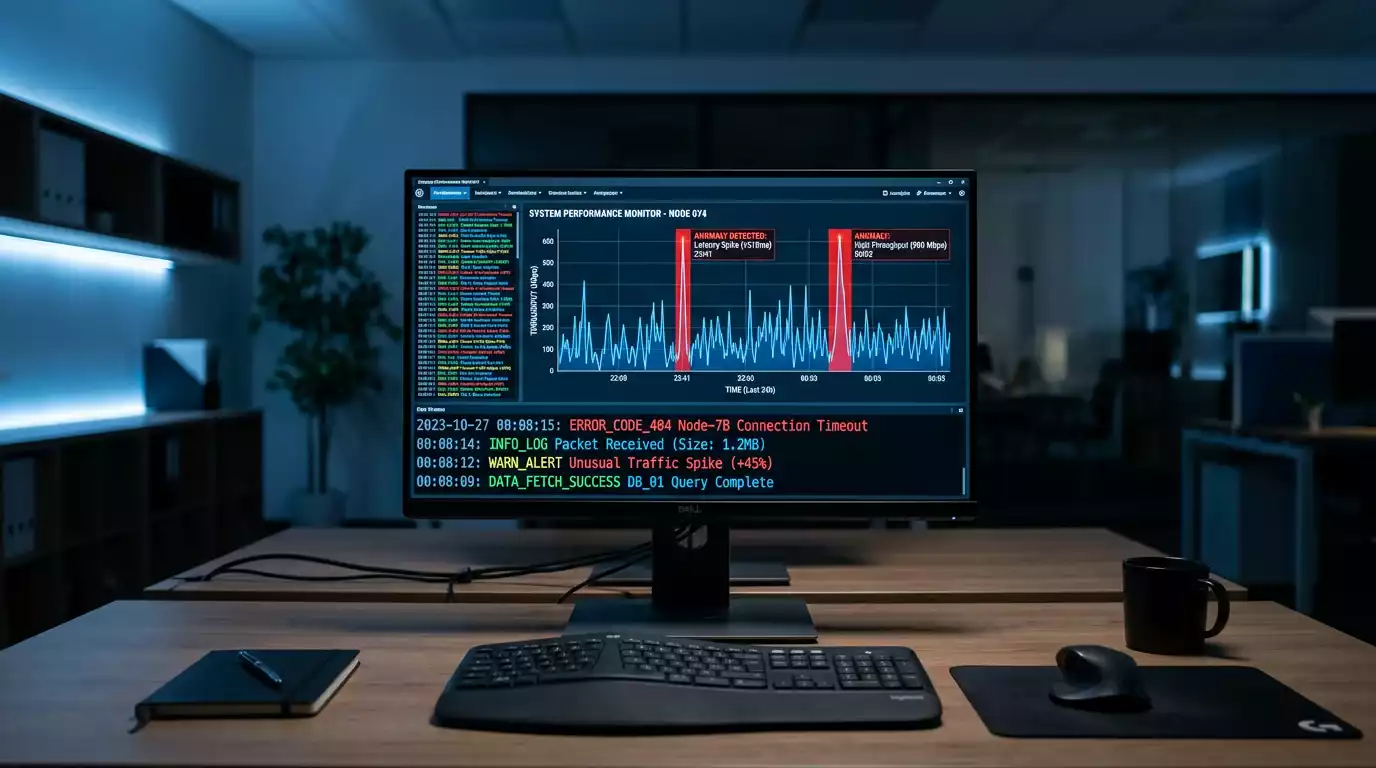
In practice, integrity partners aggregate wagering data across multiple operators in close to real time, normalise it against historical volume and price baselines, and flag anomalies for review. The flags are not automatically triggered by a large bet – a single high-stake wager from a known sharp account is normal market behaviour. The flags are triggered by clusters: unusual concentrations of action on specific outcomes that correlate with information the public should not yet have, or with patterns that match historical fingerprints of attempted manipulation.
The league receives the flagged data, evaluates it against its own internal signals – player communications, scheduling, injury reporting irregularities – and decides whether to escalate. Most flags resolve without external visibility because they turn out to be explicable through routine market dynamics or shifts in sharp bettor positioning. The flags that do not resolve become investigations, and a small subset of those become public disciplinary actions.
The technology stack underneath this has grown sophisticated. The bedrock of the relationship between MLB and the sportsbooks, as Manfred has framed it, is the ability to monitor betting activity and the ability to discern inappropriate patterns. The discernment part is where most of the analytical investment has gone over the past decade – pattern recognition, statistical anomaly detection, behavioural baselines for known-sharp accounts versus public-flow patterns – and the results have improved correspondingly.
The Patterns That Get a Bet Flagged
Volume anomalies are the most common trigger. A specific prop market that typically sees five percent of total daily prop volume but is suddenly attracting forty percent of action gets attention. Volume by itself is not a verdict – major news events drive volume too – but a volume anomaly combined with the absence of an explanatory event is a red flag.
Correlation with insider-accessible information is the harder pattern to detect and the most concerning when it appears. A spike in action on a specific player’s unders for a game, with the action concentrated in accounts geographically clustered around the player’s home market and timed to immediately precede a non-public injury report, is the kind of pattern that triggers the most serious reviews. The geographic-clustering signal in particular has improved significantly with the geolocation infrastructure that mobile betting brought to the regulated US market.
Pattern-replication across accounts is the third major category. If twenty accounts at five different sportsbooks all wager identical or near-identical structures on the same proposition within a narrow time window, the monitoring system flags the coordination signature. The accounts may belong to a syndicate, which is a legitimate market participant – or they may belong to a coordinated manipulation effort, which is not. The distinction usually surfaces through deeper analysis of the accounts’ historical behaviour.
Wager-size patterns produce more nuanced signals. A sudden migration of large-stake action toward an unexpected side, combined with a corresponding line move that does not match the public bet percentage, is a classic reverse-line-movement signal. The same signal that sophisticated bettors use to read sharp money is also what the integrity infrastructure uses to detect when the sharp money looks suspicious rather than informed.
Player Suspensions and the Historical Precedent
The enforcement track record under the current commissioner has been visible. Multiple players have received permanent or lengthy bans over the past several years for betting-related infractions. The league has consistently treated betting on one’s own games as a category-one offence, with the standard penalty being a lifetime ban. Lesser infractions – betting on other MLB games while employed by an MLB team, for instance – have produced suspensions of varying lengths depending on circumstances.
The precedents matter for UK punters because they establish the credibility of the deterrent. A player considering whether to engage with non-public information faces a known, visible, career-ending penalty if caught, with a well-documented detection apparatus that has demonstrated its ability to catch coordinated patterns. The deterrent effect is real, and the consistency of enforcement signals to the broader market that the league is committed to the framework rather than treating it as theatre.
The recent November 2025 enforcement response – the $200 limit on pitch-level props and the parlay ban that followed the Cleveland-related investigation – is a different category of action. Those were structural market-design changes rather than individual disciplinary measures, and they reflect a different lever in the league’s toolkit. Disciplinary actions handle past violations. Market-design changes handle future opportunity. The fact that the league reached for the second lever in late 2025 indicates that the framework has matured beyond reactive enforcement into proactive structural management.
What This Means for UK Punters Specifically
The most immediate practical consequence for UK MLB bettors is stability. A well-monitored market is a more reliable market. Lines that emerge from the integrity-monitored ecosystem reflect, at least in part, the absence of large-scale undetected manipulation. That does not mean the lines are always correct – they are not – but it does mean the prices are not systematically biased by hidden non-public information leaking into the wagering stream.
The secondary consequence is what some commentators have called the integrity premium. When operators face higher costs to maintain the monitoring infrastructure, those costs partially flow through into the margins charged to punters. The book that participates in a robust integrity framework operates at a slightly higher cost than the offshore operator that does not, and the difference shows up in tighter limits, more conservative risk management, and occasionally in marginally less competitive pricing on the prop markets that have been the focus of recent scrutiny. The trade-off is a market that is meaningfully safer to bet into. Most UK punters who have thought through the cost-benefit accept the trade.
The third consequence is account-level scrutiny. UK-licensed operators have a long-standing practice of evaluating account behaviour for both responsible-gambling signals and integrity signals, and the post-November 2025 environment has tightened that evaluation. Punters who run unusual patterns – even legitimately, even profitably – sometimes encounter limit reductions or account reviews that they would not have encountered five years ago. The friction is real but should not be confused with arbitrary punishment. It is the visible edge of an integrity infrastructure that is otherwise invisible, and the same infrastructure that protects the broader market also occasionally inconveniences individual sharp punters.
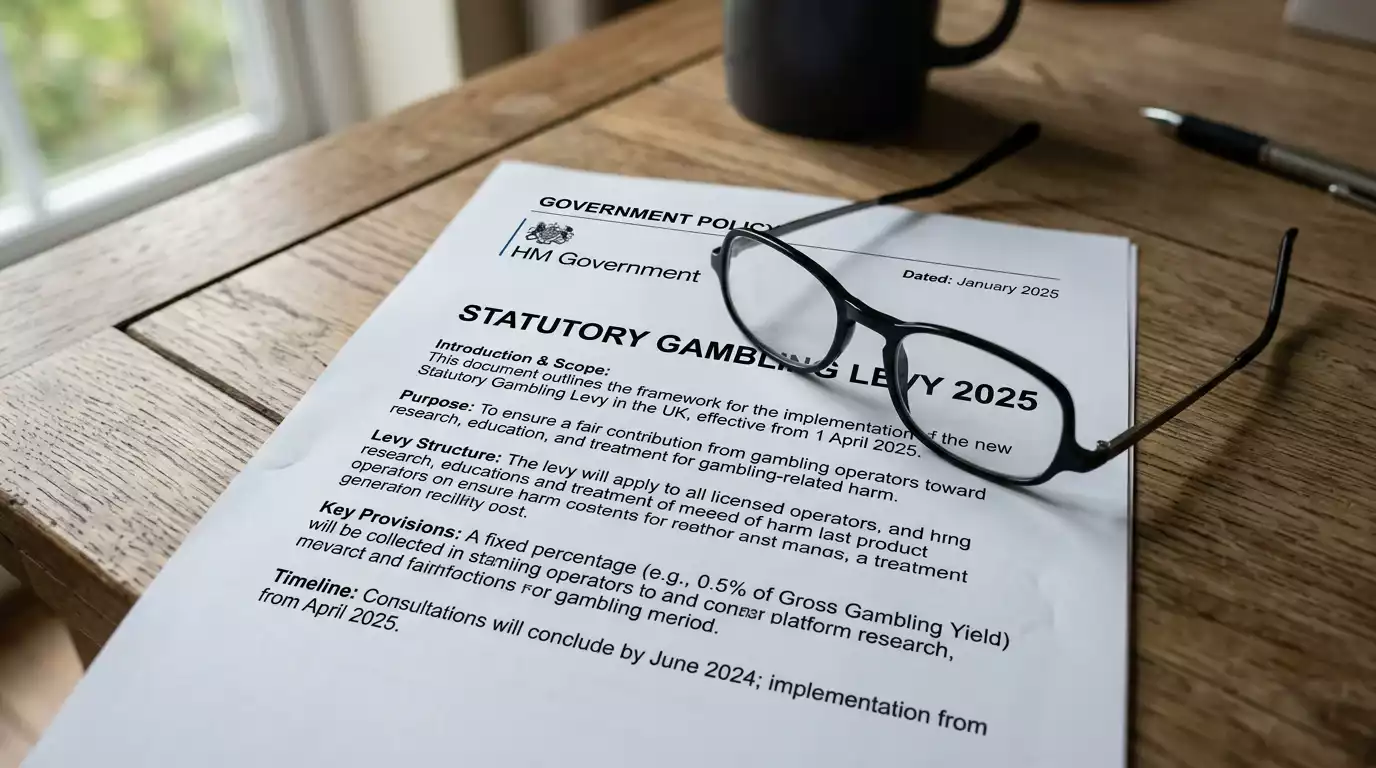
The relationship between integrity monitoring and the broader regulatory environment is tighter than it might appear. The 1.1% statutory gambling levy now in effect across the UK funds research and prevention work that supports the integrity ecosystem indirectly, and the regulatory expectations on UKGC-licensed books have continued to evolve in parallel with the integrity-monitoring framework. For the broader picture of how UK regulatory infrastructure intersects with the betting market on MLB, see my breakdown of how the 1.1% statutory gambling levy affects UK MLB bettors. The two frameworks operate in different lanes but reinforce each other.
The Bettor Habit That Adapts to the New Reality
For UK punters who want to stay aligned with how the prop and main-line markets now function, the practical adjustments are modest. Bet at UKGC-licensed operators. Verify the operator participates in standard integrity-monitoring partnerships. Read the rule book on suspended games, voided bets, and integrity-flagged outcomes – those rules vary across operators and matter when an event triggers an unusual settlement. Accept that the prop landscape, particularly the more granular categories, is structurally different than it was eighteen months ago, and that the difference is permanent rather than temporary. The market that emerges from a robust integrity framework is a tighter, more reliable, and slightly more constrained market than the one that preceded it, and on net it is a better market to bet into for any UK punter who values consistency over edge-case volatility.
Are UK bookmakers part of MLB’s monitoring network?
Most major UK-licensed sportsbooks participate in integrity-monitoring frameworks that share relevant data with MLB and with international integrity bodies. The exact contractual structure varies by operator, but the principle is consistent: regulated operators in major markets are now part of a coordinated information-sharing infrastructure that flags anomalous patterns to the league. The operators outside this framework – typically unregulated offshore sites – are excluded for reasons that should reassure rather than concern UK punters using licensed channels.
Can my bet be voided if a game is later flagged as compromised?
In principle, yes. The rule books of UK-licensed operators include provisions for voiding wagers on games that are subsequently determined to have been compromised, with stakes returned to affected accounts. In practice these voids are rare because integrity flags usually surface during or shortly after the wagering window, before settlement is final. The provision exists, but the operational frequency of post-settlement voids triggered by integrity findings is low across the regulated UK market.
Prepared by the Betting Tips for Baseball editorial staff.