
MLB Park Altitude and Totals: Beyond Coors Field
 Available in US
Table of Contents
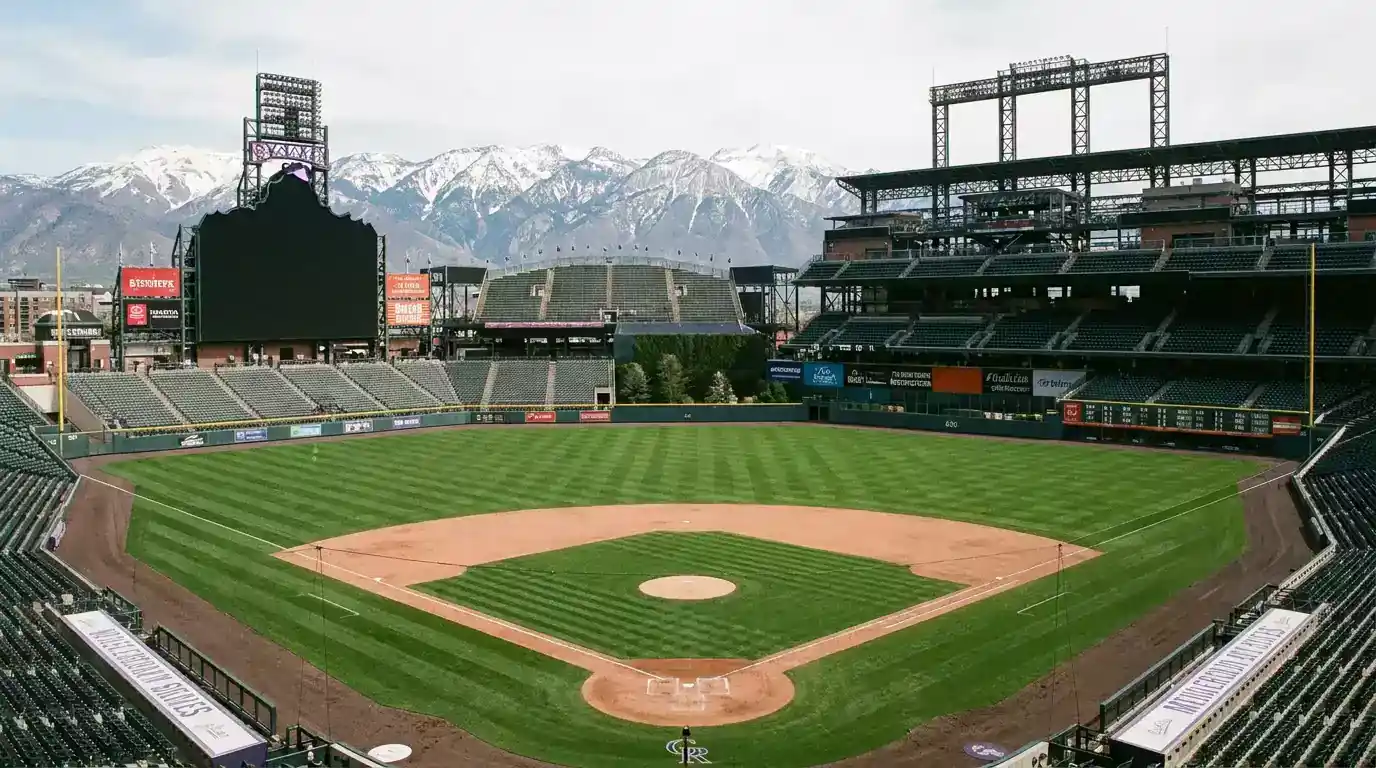
The Friday Night I Stopped Trusting Sea-Level Numbers
A Friday night in late June, Coors Field, two teams I knew well – Rockies hosting a National League West rival with two solid starting pitchers on the mound. The total opened at 11. I thought it was high, looked at both starters’ road ERAs, and bet the under. The game finished 14-11 in 11 innings. The bullpen on both sides got obliterated. The under bet was dead by the fifth inning. I paid for that mistake with a chunk of my July bankroll and a lasting respect for altitude as a betting factor. The Rocky Mountain physics of a baseball at 5,280 feet above sea level is not a soft preference – it is a fundamental change in the run environment that overrides the sea-level analytical models most punters arrive with.
For UK punters approaching MLB seriously, altitude is one of the cleanest park-factor inputs to learn because the physics are well-understood, the numbers are stable across seasons, and the betting market – particularly at UK-licensed bookmakers offering moderate MLB coverage – does not always price altitude effects fully. The Coors Field extreme case gets the headlines, but several other parks at meaningful elevations produce smaller versions of the same dynamic that recreational punters tend to miss entirely.
The Physics of Altitude and Ball Flight
The mechanism is straightforward in physics terms even though the implications for baseball are messy. Air density decreases as altitude increases. At sea level, air is roughly 1.225 kilograms per cubic metre. At 5,280 feet – the elevation of Coors Field in Denver – air density drops by approximately 17%. Lower air density means less aerodynamic drag on a moving object. Less drag on a hit baseball means the ball travels further before gravity pulls it to ground.
The numerical effect at Coors Field: a baseball hit with identical exit velocity, launch angle and spin rate travels approximately 5% further than it would at sea level. That 5% difference is enough to convert routine fly balls into home runs, to turn warning-track outs into doubles off the wall, and to push hits-per-game numbers materially upward. Breaking pitches also move less in the thinner air because the magnus effect that produces curveball break depends on the same air density that produces drag – curveballs flatten out, sliders lose their bite, and pitcher effectiveness drops across the board.
The compound effect on scoring is larger than either factor alone would suggest. Hitters get more hits because balls travel further. Pitchers cannot rely on their breaking pitches to retire those hitters. Bullpens get exposed for longer innings because starters get knocked out earlier. Each individual physics effect would justify a totals adjustment of perhaps half a run; the compound effect at Coors Field has historically produced totals lines that run two to three runs higher than the same teams’ equivalent matchups at neutral parks.
Coors Field and the Humidor Story
Coors Field has been the extreme outlier in MLB park-factor analysis since the Rockies began play in 1995. The original Coors Field seasons produced run environments so distorted – averaging seven runs per team per game in some seasons – that they broke any conventional analytical framework. In 2002, the Rockies installed a humidor in the stadium to address the issue: baseballs stored in a temperature- and humidity-controlled environment before games to counteract the dry Denver air’s effect on the ball’s structural properties.
The humidor worked, at least partially. Storing balls at higher humidity makes them slightly heavier and softer, which reduces both the carry distance and the bat-on-ball exit velocity. Coors Field’s run environment dropped from extreme outlier territory to merely the most hitter-friendly park in baseball, which is where it has remained across the post-humidor decades.
The humidor adjustment, however, has not eliminated the altitude effect – it has only mitigated it. Coors Field still produces total runs roughly 20 to 30% above the league average, and totals lines on Rockies home games still need to price an altitude premium of 1.5 to 2.5 runs above the sea-level equivalent matchup. The bookmaker books generally price this premium correctly on Coors games specifically, because the pattern is too well-known to ignore. The interesting analytical question is what happens at other elevated parks where the altitude effect is real but smaller.
One ongoing question is whether the humidor maintains its calibration consistently across seasons. The mechanism is technically sound but operationally dependent on storage conditions being precisely controlled, and small deviations could theoretically produce season-to-season variation in the altitude offset that the humidor delivers. There is no evidence of large drift, but punters tracking Coors totals across multiple seasons should be aware that the historical scoring distribution at the park can shift in ways that pure altitude alone would not predict.
Other Elevated Parks That Matter
Beyond Coors Field, several MLB stadiums sit at altitudes high enough to produce measurable run-environment shifts. Chase Field in Phoenix, home of the Arizona Diamondbacks, sits at 1,059 feet – roughly 20% of Coors Field’s elevation but still well above sea level. The carry distance increase at Chase is in the neighbourhood of 1.5%, which is meaningful but not enormous. Combined with Phoenix’s typically hot daytime temperatures – and league-wide scoring runs at 4.7 runs per game when temperatures hit 80°F or above, compared with 4.2 at temperatures below 60°F – the Chase Field altitude-plus-heat combination produces totals lines that should price 0.5 to 1.0 run above the equivalent sea-level matchup.
Truist Park in Atlanta, home of the Braves, sits at approximately 1,050 feet. The altitude effect is similar in magnitude to Chase Field’s but combined with the humid Georgia summer climate it produces a slightly different ball-flight profile. The humidity partially offsets the altitude – more humid air is actually less dense than dry air at the same temperature, contrary to intuition, but the temperature and altitude effects dominate the humidity contribution in most Atlanta summer games.
Globe Life Field in Arlington, the Texas Rangers’ newer home, has a retractable roof that complicates the altitude calculation because the playing environment is climate-controlled rather than fully exposed to the local air mass. When the roof is closed, the altitude effect is dampened by the indoor air handling. When the roof is open, the standard altitude-plus-heat calculation applies. Tracking the roof state for Rangers home games is one of the more granular but more analytically useful pre-match data points UK punters can incorporate.
Several other parks sit at low elevations – 500 to 800 feet – where the altitude effect is too small to override the noise of weather and matchup. The practical filter for UK punters is to focus altitude-adjusted modelling on Coors, Chase and Truist as the three parks where altitude is material enough to bet, and to treat the lower-elevation parks as neutral on altitude alone.
How Altitude Shifts Totals in Practice
The practical betting application of altitude effect comes through the totals market. The typical impact at Coors Field is a +1.5 to +2.5 run adjustment to the closing total, meaning the same two teams who would draw a total of 8 at a neutral park might see 9.5 or 10 at Coors. The bookmaker pricing on Coors games generally captures this adjustment correctly, which means the edge from raw altitude is small at that specific park.
The edges sit elsewhere. First, the over-under pricing at Chase Field and Truist Park often understates the altitude-plus-temperature combination, particularly on day games or hot weeknight matchups. The recreational market tends to think of those parks as “regular” stadiums and miss the smaller-but-real altitude contribution. Backing the over in 90°F day games at Chase or Truist has been a consistent edge for punters who track the conditions.
Second, the interaction with weather amplifies the altitude effect non-linearly. A 95°F day game at Coors Field produces run environments that exceed even the standard altitude-adjusted total because the heat and elevation stack. A 50°F night game at Coors in late September produces a much smaller altitude effect because the cold-weather scoring suppression partially offsets the thin-air carry boost. Cross-referencing first-pitch temperature forecasts with altitude is one of the more reliable totals-prediction methods at elevated parks.
Third, the strikeout prop markets on starting pitchers at Coors Field run lower than the same pitcher’s road averages, because breaking pitches lose effectiveness in thin air and pitchers rely more heavily on fastballs that produce fewer strikeouts. Under bets on starting pitcher strikeout props at Coors are a niche but consistent edge.
The Interaction With Other Weather Variables
Altitude does not operate in isolation. Temperature, humidity and wind all interact with elevation in ways that produce compound or offsetting effects. The 80°F+ versus sub-60°F scoring differential of 0.5 runs per game applies at all parks, but at Coors Field the elevated baseline means the absolute temperature effect can produce 12+ run games in hot weather and 7-run games in cold weather from the same matchup.
The right pre-match work for elevated-park totals is to layer the inputs in sequence. Start with the team-level total projection. Add the altitude adjustment specific to the park. Add the temperature adjustment relative to the seasonal baseline. Add the wind adjustment if any forecasted gusts exceed 15 mph in a meaningful direction. Add the pitcher-quality adjustment relative to road norms. The compound projection that emerges will diverge meaningfully from the bookmaker’s closing line in many specific matchups, and those divergences are where the systematic altitude-based edges live. The natural extension of altitude modelling is wind modelling at the parks where prevailing-wind patterns dominate the run environment more than altitude does – and the analytical realities of how to read wind direction at MLB parks sit naturally alongside the altitude framework for any punter building a serious park-factor model.
Building Altitude Into Your Pre-Match Process
The right discipline for UK punters at elevated parks is to treat altitude as a systematic adjustment factor rather than as a marquee park-specific story. Build a small table of altitude offsets for Coors, Chase and Truist. Cross-reference temperature forecasts before settling on totals positions. Track strikeout prop unders at Coors as a niche but consistent edge. And resist the urge to bet against altitude on instinct – the physics is real, the numbers are stable, and the bookmakers who price these games correctly are far less common than the recreational punters who lose money fighting the science.
Does the Coors humidor still work as designed?
The humidor has functioned consistently since its 2002 installation and has reduced the extreme run environment that existed in Coors Field’s pre-humidor seasons. The park still produces totals roughly 20-30% above league average, but it is no longer the historical outlier it was in the late 1990s. There is no evidence of major calibration drift, but punters should still monitor multi-season scoring trends at Coors because small operational variations in storage conditions could theoretically produce season-to-season shifts that pure altitude alone would not predict.
How much does altitude affect curveball break and K-props?
Altitude reduces breaking-pitch effectiveness because the magnus force that creates curveball and slider movement depends on the same air density that produces drag. At Coors Field, breaking pitches typically show 10-15% less movement than the same pitchers’ offerings at sea level, which reduces swing-and-miss rates and pushes pitcher strikeout numbers lower than their road averages. Under bets on starting pitcher strikeout props at Coors are a niche but consistent edge, particularly for breaking-ball-reliant starters whose arsenals depend on movement rather than velocity.
Created by the ”Betting Tips for Baseball” editorial team.